Carving the die
Your artwork is translated into a hand-finished embossing die — lines deepened, detail resolved, so the hide takes the image cleanly.
Cutting & molding
Full-grain vegetable-tanned hide is cut, then wet-molded over a form of your exact earbud model. It shapes once, and keeps that shape for life.
Dyeing the relief
Pigment is worked into the embossed lines by hand — the reason our two-tone pieces have depth a printed surface can't fake.
Lacing the edge
Waxed thread is worked around the rim in a hand-tensioned cross pattern, binding the shell together. Snag it, drop it — the edge tightens instead of peeling.
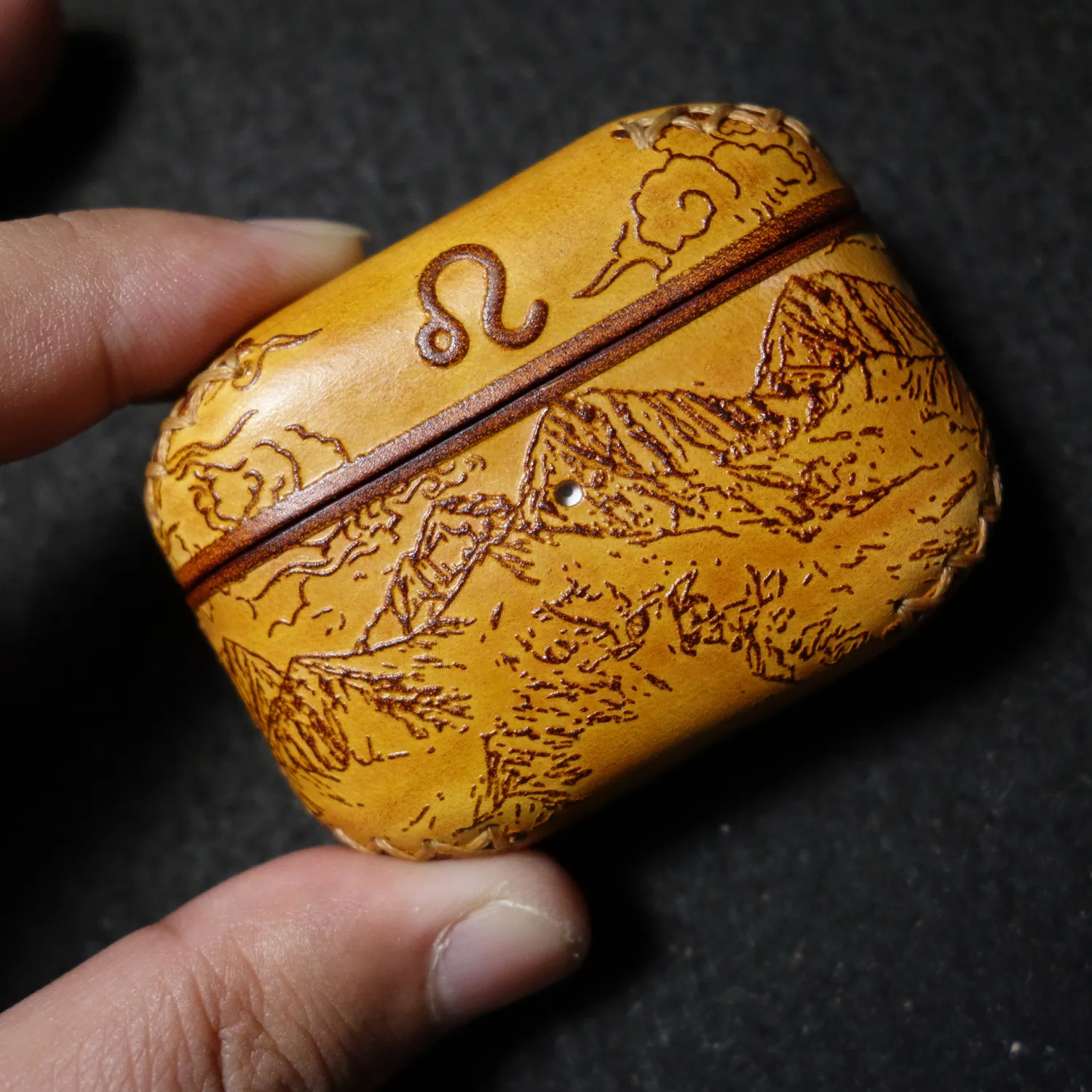
Full-grain, not corrected
Most "leather" goods are corrected grain — sanded, pigmented, stamped with an artificial pattern. We use full-grain vegetable-tanned hide: the top layer of the skin, un-sanded, with every natural mark left in place.
It is the only grade of leather that develops a patina — darkening, polishing, recording how you carry it. A case from us looks better in year three than the day it shipped.
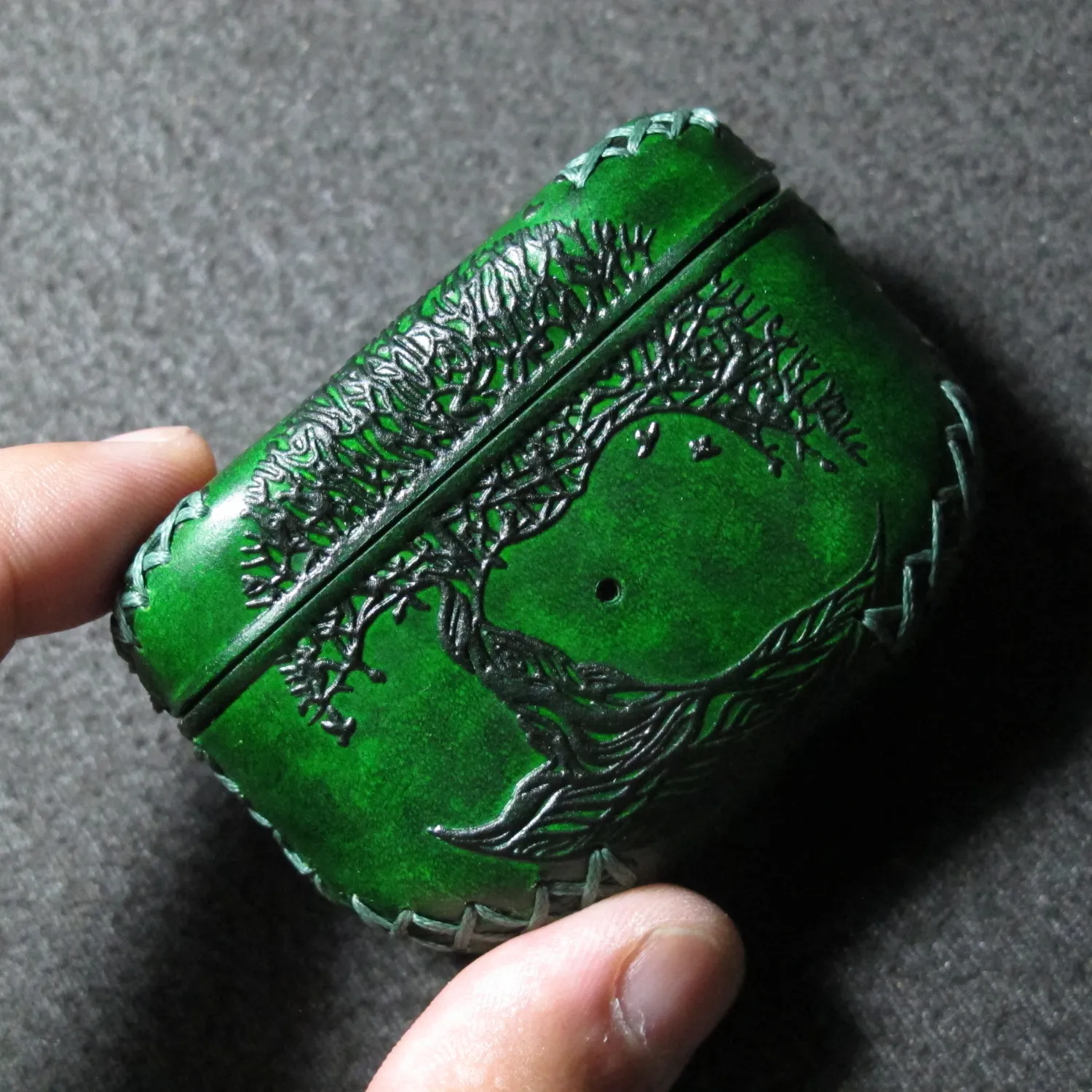
Embossed, not printed
Printing sits on the surface and wears off. Embossing is structure — the image is pressed into the hide itself, 0.5 to 1.5 mm deep. Your artwork becomes part of the material.
That's why "any artwork" is possible for us: an illustration, a signature, a skyline, a dog's face. If it can be drawn, it can be carved and pressed.
Start yours